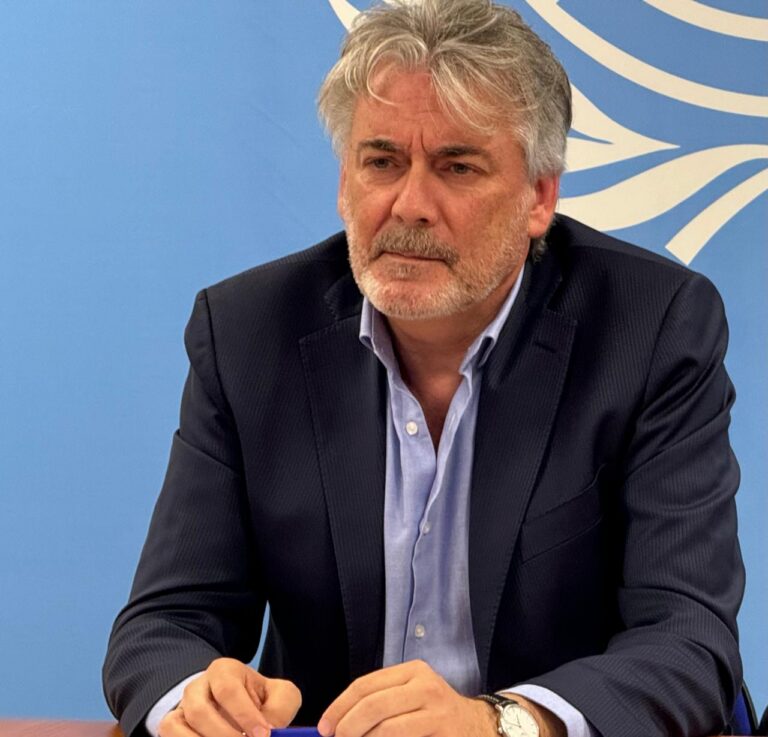
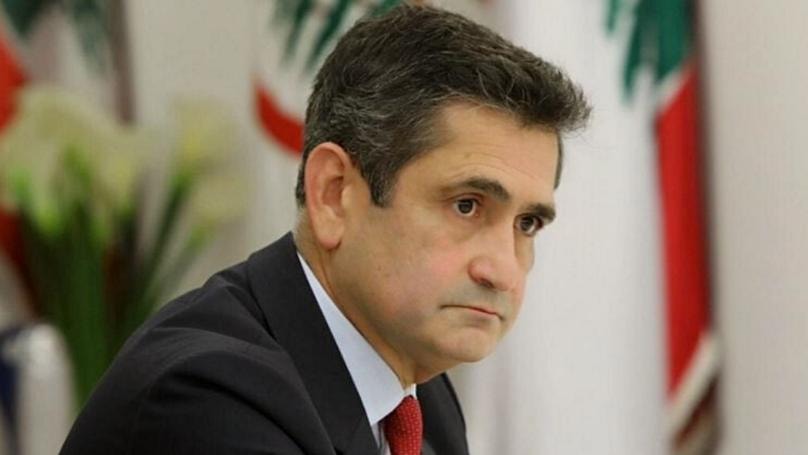
ريشار قيوميجيان، رئيس جهاز العلاقات الخارجية في حزب القوات اللبنانية
Masdar Diplomacy
Interview by Marlene Khalife
The “International Protection for Lebanon” conference was held On last Wednesday , organized by the Foreign Relations Department of the Lebanese Forces at the Citia Apart Hotel in Achrafieh. The event comes as part of the follow-up to the Maarab III outcomes, amid renewed debate over ways to implement international resolutions—particularly United Nations Security Council Resolutions 1701, 1559, and 1680.
In this context, the conference organizers highlighted a growing tendency to link the continued failure to implement these resolutions with the need to intensify political and diplomatic pressure, potentially leading to recourse to international mechanisms, including the Security Council. While organizers stress that the primary reliance remains on the Lebanese state, they also raise the option of “international protection” as a possible path should domestic implementation falter—emphasizing that this concept is not limited to military aspects, but may also include political, social, and financial dimensions.
Based on the overall Lebanese and international interventions presented at the conference, calls to implement international resolutions—particularly Resolutions 1559, 1680, and 1701—are closely tied to the process of enforcing decisions taken by the Lebanese government led by Nawaf Salam, notably the March 2 decision that classified Hezbollah as an illegal organization. This comes amid the difficulty of pushing toward direct confrontation between the Lebanese Army and Hezbollah, raising, in practical terms, the possibility of seeking external support or forces as one of the proposed scenarios for implementation. [Full coverage to follow.]
Below is the full text of the interview conducted by Masdar Diplomacy with the head of the Foreign Relations Department of the Lebanese Forces, former minister Richard Kayoumjian:
Masdar Diplomacy: What is the objective of this conference, and what does international protection mean?
Richard Kayoumjian: This conference is a continuation of the Maarab III conference. Our primary reliance remains on the Lebanese state—it is the state that should protect Lebanon. However, if the state proves unable or incapable, then necessity may justify international protection. In that case, we would turn to United Nations resolutions and to Chapter VII of the UN Charter to help the Lebanese state restore its sovereignty and authority over all Lebanese territory. This is the essence of the conference. Protection is not necessarily limited to the military dimension; it can also be political and social. Today, we are accompanied by political, social, and financial support and protection.
Masdar Diplomacy: Usually, it is the state concerned that requests the Security Council to place it under Chapter VII. To my knowledge, no country has done so. The Lebanese state has not submitted such a request—so what mechanism will you adopt? Is this conference an extension of the letter sent by the Lebanese Ministry of Foreign Affairs to the Security Council informing it that Hezbollah has become an illegal organization under the March 2 government decision—something interpreted as paving the way for Chapter VII? And are you coordinating with the Foreign Ministry on this matter?
Richard Kayoumjian: Of course, this is part of the general climate in the country. It follows up on the government’s decisions to disarm Hezbollah and ban its military and security activities. We are fully aware of the obstacles within the Security Council, but as a political party, we present our position, our vision, and what we expect from the international community.
Masdar Diplomacy: So this is a form of political and diplomatic pressure?
Richard Kayoumjian: It is political pressure aimed at eventually reaching Chapter VII—if that happens, international forces could come to assist the Lebanese state. Why not?
Masdar Diplomacy: Are you coordinating with specific countries in the Security Council to achieve international protection for Lebanon under Chapter VII?
Richard Kayoumjian: No. We have friends whom we brief, but there is no specific coordination with any particular country. This conference is part of our political work.
Masdar Diplomacy: There are three resolutions—1701, 1680, and 1559—but so far they have only been partially implemented. The unimplemented parts fall under the responsibility of the Lebanese state, not the international community. How do you respond to that?
Richard Kayoumjian: The issue is not limited to international resolutions. It also extends to the Taif Agreement, which calls for the disarmament of all militias, including Hezbollah. These resolutions are implemented over a long-term process, and they will inevitably be implemented, even if it takes time.
Masdar Diplomacy: What do you rely on now to ensure their implementation, given they were not implemented previously?
Richard Kayoumjian: Pressure may lead to their implementation, and we will eventually reach that point. It took a long time to implement Resolution 425, but Israel ultimately withdrew. The Syrians withdrew under Resolution 1559, which was partially implemented. This is a process that will unfold and lead to that outcome.
Masdar Diplomacy: Your political camp—particularly the Lebanese Forces—has always advocated for sovereignty and criticized Hezbollah for relying on external support, specifically Iran, to strengthen its position domestically. Wouldn’t requesting international protection under Chapter VII affect Lebanon’s sovereignty?
Richard Kayoumjian: No, absolutely not. We are appealing to the United Nations and the Security Council, and that is Lebanon’s right. We are not relying on a particular axis or a specific state to arm a militia. That is entirely different. Just as countries support the Lebanese Army, the Lebanese state can ask the international community, through the Security Council, to assist it. This is a legitimate demand and a sovereign right—it does not undermine sovereignty.
Masdar Diplomacy: But no country in the world asks to be placed under Chapter VII!
Richard Kayoumjian: We must be realistic. Today, there is a state—Iran—that uses Lebanon and drags it into war. There is another state—Israel—that responds to that war. Lebanon is effectively caught between two states. It is therefore natural for it to turn to the Security Council.
Masdar Diplomacy: Who would submit such a request to the Security Council?
Richard Kayoumjian: The Lebanese state should do so, and we will apply pressure in that direction.